Operators were activating cooling towers only when condenser water temperature reached a fixed threshold, regardless of ambient wet-bulb conditions or compressor load. ClimaWISE compressor efficiency tracking — which accounts for the direct relationship between condensing temperature, oil cooling performance, and isentropic efficiency — showed that the system was consistently operating above the thermodynamically optimal condensing range for the prevailing conditions. By analysing the safe operating margins of the compressors and condenser, the setpoint threshold was lowered to a safe but more aggressive range. Cooling towers began running earlier and more consistently, bringing condensing temperature down and pushing compressor and condenser efficiency KPIs upward. The result was a measured 14% energy saving against the Dynamic Fingerprint Baseline.
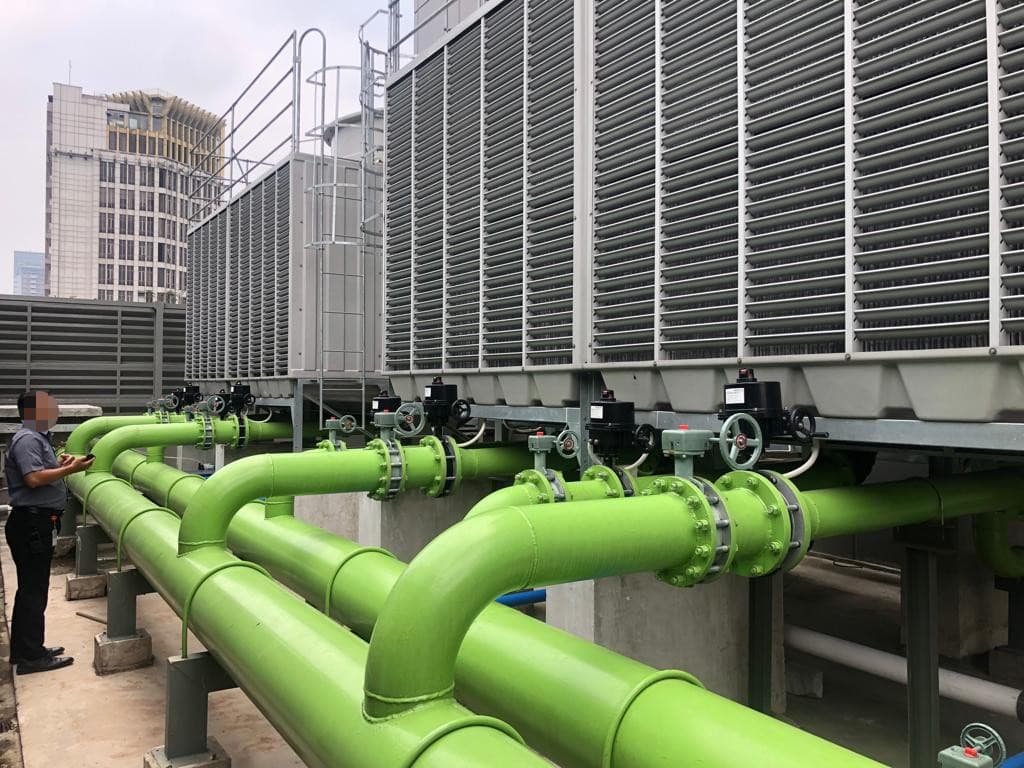
Cooling tower optimisation & condenser efficiency — Southeast Asia
System & context.
| Location type | Hotel, Southeast Asia |
|---|---|
| Chiller type | 2 x Water-cooled chiller plant |
| Cooling tower control | Manual (pre-optimisation) — operator-triggered at fixed water temperature |
| Data collection | ClimaWISE hardware — temperature sensors, power meters, RS485 |
| Performance method | ClimaWISE + Dynamic Fingerprint Baseline + System Health Index (SHI) |
Prior to the ClimaWISE implementation, operators at this hotel chiller plant were manually logging temperatures, pressures, and running hours on paper sheets. There was no automated visibility into actual system performance and no structured basis for comparing real operating conditions against design intent. After connecting the chiller plant to the ClimaWISE platform, it immediately became clear that the cooling towers were not running in automatic mode. Instead, operators were manually switching them on and off based on a fixed condenser water temperature threshold, without accounting for actual compressor load or ambient conditions. The Dynamic Fingerprint Baseline and System Health Index established by ClimaWISE gave a continuous reference for compressor efficiency relative to actual operating conditions — including the influence of condenser water temperature and oil cooling performance. This made it possible to quantify exactly how much efficiency was being left on the table by the conservative manual control approach.
What ClimaWISE found.
The fingerprint surfaces issues that show up nowhere else, not in the BMS, not in vendor diagnostics, not in scheduled service.
All operational data including temperatures, pressures, and running hours were previously recorded by hand at fixed intervals. This meant anomalies between log entries went undetected and there was no continuous performance record. ClimaWISE automated the full data collection via hardware-mounted sensors and power meters connected through RS485, with data streaming to the platform every minute. Operators now have a live dashboard showing system status, efficiency KPIs, and event-based alerts, replacing the paper process entirely and enabling proactive rather than reactive management.
The local climate features relatively stable ambient temperatures but significant variation in humidity, which directly affects wet-bulb temperature and therefore the optimal condensing setpoint. ClimaWISE analysed the humidity patterns and produced an advisory setpoint schedule that accounts for these variations. The recommended setpoints are visible as events on the dashboard, giving operators clear guidance on when and how to adjust operating conditions. The next phase — automating setpoints based on actual hotel occupancy and cooling load — is defined and ready for implementation when the client is ready to proceed.
What changed.
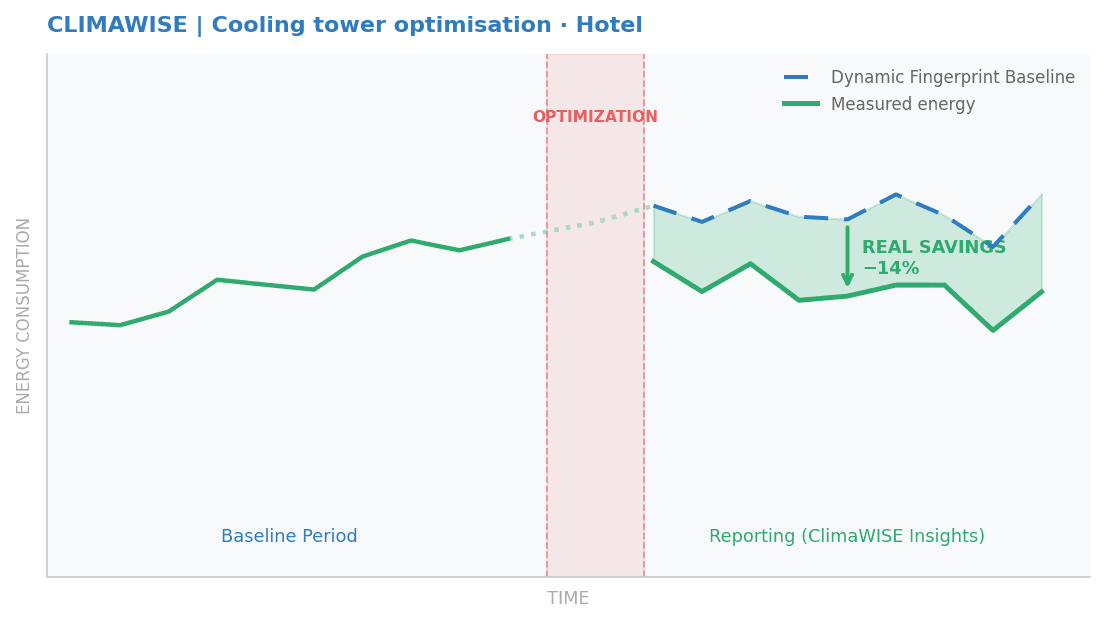
Advisory setpoint schedule in place. Next phase links setpoints to hotel load and occupancy data.
Achieved by lowering condensing setpoint to safe operational margins, improving compressor and condenser efficiency KPIs as measured by the System Health Index.
Full replacement of manual paper logging with continuous ClimaWISE analytics by live dashboard.
Recognise this in your own installation?
Let us read your fingerprint.